Saturday, 21 May 2022

PSEUD’S CORNER* : Am I nearly there yet?

Living by an estuary and seeing its mood change is a superb surprise each day as I walk to my studio.


Infinity Books were running a competition:

 ‘Every year, ‘Love the Words’ (a quote from Dylan Thomas) asks for contributions to its annual poetry competition as part of International Dylan Thomas Day, 14 May. This year, writers around the world were asked to pen a poem on the theme of ‘water’, inspired by Dylan’s name – which means ‘son of the sea’


I was keen to contribute inspired by my daily walk.


RESTLESS CALM


Each day change; rise and fall,

Constant, the stalking heron and ballyragging gull.

Bleakest grey or incredible blue, above tawny shifting sands,

fashioning a new passage every day.


Salt mingles with fresh water,

Both anoint the green marsh,

Slop against the desultory keel

Middle distant white farms punctuate impossible green.


Across to Black Scar, 

No two days the same,

The ferry now forgotten.

Its shelter seen not sought,

Blessed are we who stand and pray by the flood.


 Full details of the competition and to download this year's Love the Words book 

View and Download


Laugharne Estuary   Sumi ink on Hosho paper    45 x 1800 cm


*Pseuds Corner

Listing pretentious, pseudo-intellectual quotations from the media. At various times different columnists have been frequent entrants, with varied reactions. In the 1970s, Pamela Vandyke Price, a Sunday Times wine columnist, wrote to the magazine complaining that "every time I describe a wine as anything other than red or white, dry or wet, I wind up in Pseud's Corner". The column now often includes a sub-section called Pseuds Corporate, which prints unnecessarily prolix extracts from corporate press releases and statements.  

Saturday, 7 May 2022

HEY PESTO!

In the narrow lanes high above Pendine Sands there is much wild garlic this year. This perennial delight, also known as cow’s leek is the wild cousin of onion and garlic. Records of its consumption go back 1500 years with the Celtic Britons enjoying it. It is also a favourite of brown bears and wild boar.


Aside from its culinary applications in salads, as a vegetable, in soups and sauces it is also a good aid for cardiovascular and digestive ailments.


Do be careful that you are not picking lily-of-the-valley by accident, it does look similar, lily-of-the-valley is poisonous. To be sure grind a couple of leaves between your thumb and forefinger and you should get that delicious garlic aroma if you have the right stuff.


Locations of wild garlic in parts England are a closely guarded secret. A friend of mine who has just moved to near Arundel in Sussex told me that the locals were less than keen to tell of where to find wild garlic in the local woodlands. Sussex silence?


About 200 g of garlic wild garlic leaves and 300 mL of good quality olive oil and 100 g of pine nut kernels salt and pepper to taste will make you a superb pesto sauce. That you can keep the whizzed-up sauce in a Kilner jar in the fridge, ready for some fresh pasta.


Do go to it for wild garlic!

Wednesday, 4 May 2022

DISCOVERING CARMARTHEN - five favourites

‘Britain’s towns and cities do not usually sit cheek by jowl with its countryside, as we often casually assume. Between urban and rural stands a kind of landscape quite different from either. Often vast in area, though hardly noticed, it is characterised by rubbish tips and warehouses, superstores and derelict industrial plant, office parks and gypsy encampments, golf courses, allotments and fragmented, frequently scruffy, farmland.’

Marion Shoard* writing in The Land, 21 — 2017


Five favourites of mine around here, discovered during the course of a college project: 


The Wynnstay Factory Llysonnen Mill,

It squats on the landscape like some Central European nuclear processing plant. Its three silos hug the main body of this concrete lovely. Situated at the end of lane in broad fields.


Cille fwr Industrial Estate

Much to see here, industrial units for the usual suspects: Howdens, Wix, Screwfix. Yards full of containers briming with scrap metal and colourful small units (see below)  in the Post-Modern style given over to Prize Fighting Gyms and Schools of Ballet.


CARMARTHEN POST MODERN


Saint David’s Park.

Late Victorian Gothic with modern appendages. 

Most of the buildings now house NHS ambiguous medical specialists, others remain empty, dilapidated. Grade II listed chapel. Built by the inmates sadly closed now. Inmates because this was a hospital as County Asylum build in 1865, closed in 2000 after reports of bad management. 


ST DAVIDS PARK  LATE NEO GOTHIC


BT Building Carmarthen

Every town has its impossibly large BT Telephone Exchange. Most of the space in each of these is not used. All the technology these buildings used to house is now on the size of a thumb-sized computer chip. The style here is ‘Brutalism’ with panache at its most exquisite, including Venetian-style balconies wedged into it at the very top.


BT BUILDING  - A BRUTALIST MARVEL 


Glangwili Hospital 

Its  back yards and building entrances have two mood, two faces:

1. Weekdays it’s busy, busy with curious displays of unwanted office equipment shunted into the car parks or waiting patiently for a nice skip to pass.

2. One  weekend I had occasion to visit. The sun was high, no cars, a deserted air, the buildings (built 1949 mostly) were glistening in the heat, I was reminded of Santa Monica CA.


GLANGWILI: OFFICE FURNITURE PATIENTLY WAITING


GLANGWILI  - THE LAUNDRY COMPLEX


Beguiling places one and all. Perhaps the last words from Jonathan Meades

“Everything is fantastical if you stare at it long enough, everything is interesting. There is no such thing as a boring place.”

From the Introduction to his book Museum without Walls, writings and scripts.


*Marion Shoard is a British writer and campaigner. She is best known for her work concerning access to the countryside and land use conflicts. In 2002 she became the first person to give a name to the "edgelands" between town and country.

Friday, 29 April 2022

Iconic

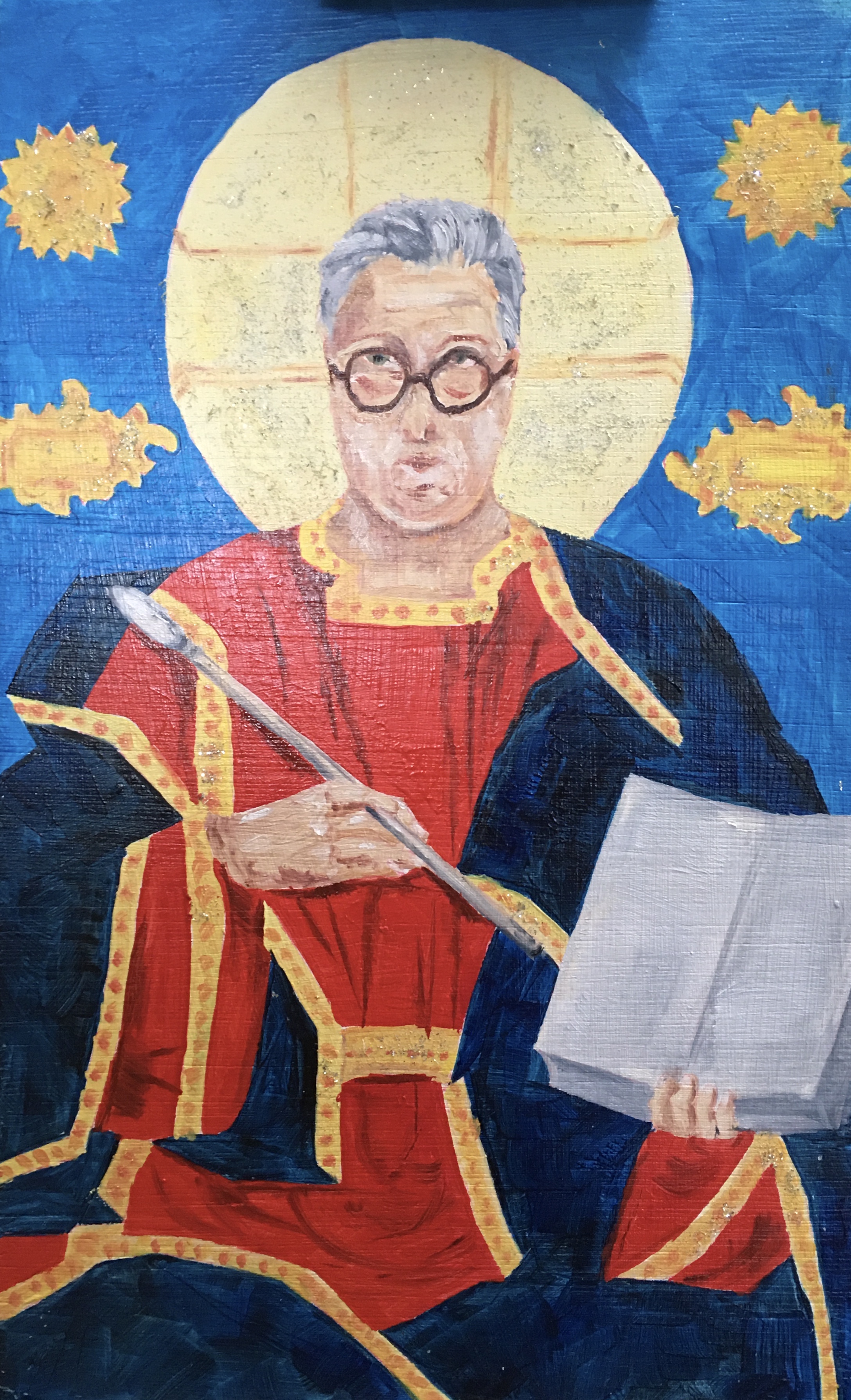
One of my briefs at Art School this term:

‘Produce a body of work that includes at least one resolved oil painting on prepared board or canvas, or another appropriate surface. The painting must reflect ideas relating to positive and negative and deal with the subject matter of self-portraiture’.


It came to me in a flash, make an icon of me!


My icon
This also provoked some background research. Icons have been an integral part of the Christian tradition since the time of Christ. Accordingly they are said to raise the soul and mind up to the level of the spirit. This is not hard to understand given the impact they make when one  standin an orthodox church in Moscow or examining the wonderful painted churches of Romania. 


Saint Luke created the first icon, one of the Virgin Mary. On being presented with it she is alleged to have said “may the grace of him who was born of me, through me, being imparted to this icon”. 


The Byzantine church encouraged their creation. If you were studying a particular Saint having an Icon of that Saint in front of you was seen as a study aid.


Their creation and development spread across the Western Church. Icons in the Byzantine style were found it all Christian countries. However their importance was eroded with development of Italian Renaissance art in the 15th and 16th centuries. Today they are revered once more, following revivals in the eastern church. Important centres for their creation are Crete, Greece and Serbia. 


Outside a church in Moscow


Icons are small wooden panels usually about a five size so 21 x 50 cm. They are painted using egg tempera on gessothe ground. The combination of these two materials accounts for their longevity, egg tempera is egg yolk mixed with powder colour.


Interestingly the process of creating an icon is called ‘writing’ an icon and those who create are called icon writers. This is because the Greek word for painting and writing is one of the same ‘graphos’.


Fortified Church with Icons Painted on its walls

Sunday, 24 April 2022

EVEN MORE FROM MAYFAIR

 Three shows at No. 6 Albemarle Street, those nice people at the Marlborough Gallery.


The London School – Well Figuratively Speaking

April 12 London


The exhibition Figuration runs until April 29, 2022. All our favourites are here. The sweet man on the front desk characterised this fab show as ‘kinda London School’.


Certainly there a lot to enjoy here. 

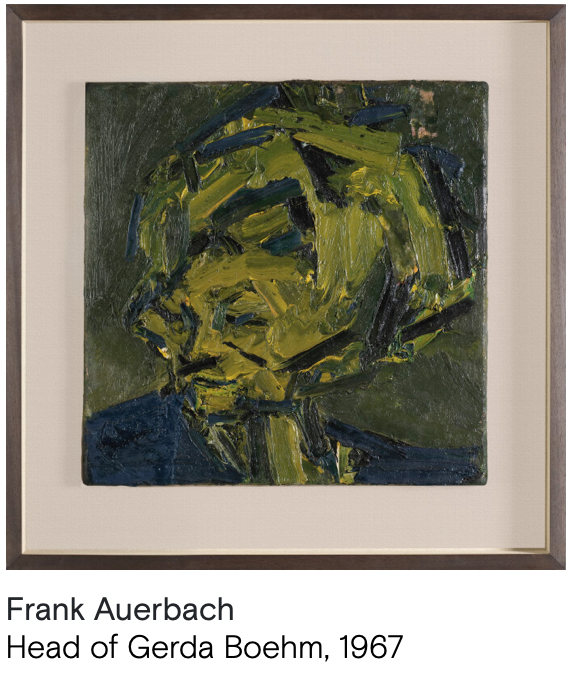
Prints and full cream oil portraits by Frank Auerbach, 

expressive etchings by Lucian Freud, 

delicate and precise drawings from Euan Uglow, 

unsettling canvases by Paula Rego characteristic of symbolic tale telling Leon Kossoff’s intimate portraits and 

R.B. Kitaj’s take on the figure.


A deft piece of curation and hanging and well worth a slow browse.


The show runs until the end of the month so you should not miss it. https://www.marlboroughgallerylondon.com/exhibition/figuration


Louise Bourgeois – Est-ce tu en as essez?

Many have flocked to see the retrospective of her textile works at the Hayward. 


This exhibition is a calmer but nonetheless candid assembly of prints and editions spanning seven decades.

Bourgeois began exploring print making 1930’s and became highly skilled and prolife and experimented with print making throughout her career.


The focus on sculpture from 1950s through to the 90s meant she did not return to printmaking until the 90’s - it became a daily activity re-examining earlier drawings and ideas.


Louise Bourgeois: Pregnant Man


April 12 

Christopher Braham Marlborough Gallery until 29 April 


Also part of Marlborough Gallery now is a captivating show of paintings by an artist who Lucian Freud described as his only true heir. 


Certainly they were both good friends, Bramham’s children sat for Freud. 


Christopher Banham 
Freud encouraged Bramham away from drawing into paint. His landscapes are drawn from Cornwall and the back gardens of south London. Beguiling back yards redolent of Pizzaro and Bonnard. 


A captivating show of paintings by an artist who Lucian Freud described as his ‘only true heir’.


https://www.marlboroughgallerylondon.com/exhibition/christopher-bramham 

Friday, 22 April 2022

MARVELS IN MAYFAIR


At school we are encouraged to gallery go. It’s more of a treat than a chore. Here are three not to miss shows and run until the end of April.


Jeff Elrod at Max Hetzler

There is always a treat at Max Hetzler, 41 Dover Street. 

American abstract impressionism with a twist. The twist being a beguiling use of tape. The tape masks out areas of linier white areas on these 180 x 160 cm canvases and the rest is acrylic and spray paint.

As the Galerie announces 

This where the parallel planets of digital and paint collide.

https://www.maxhetzler.com/viewing-rooms/jeff-elrod-2022


Elrod: parallel planets of digital and paint 


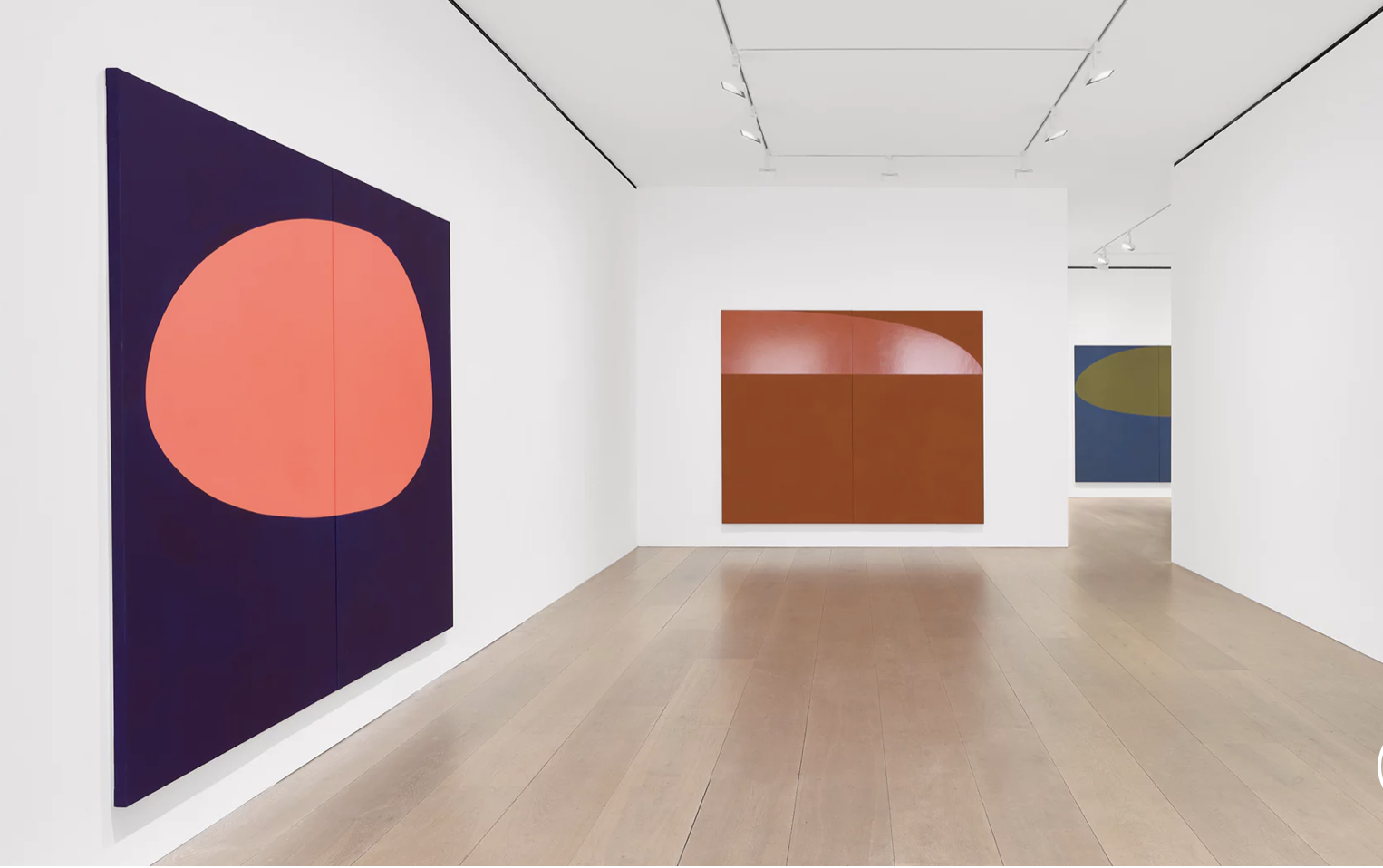
Susan Frecon at David Zwirner

Don’t talk, experience, is the message in the Zwirner’s write up about this their eighth solo Frecon show. 


These are big pieces and as you get as close as you can to each one appreciated the magical variations in paint thickness and tonal values. And the constant interplay between motif and scale. 

https://www.davidzwirner.com/exhibitions/2022/suzan-frecon-recent-paintings-oil-and-water/press-release


Frecon: interplay between motif and scale


Mahesh Baliga at David Zwirner

A thrilling counterpoint to Frecon imposing colour fields is this collection of Indian delights by Mahesh Baliga. I was transported right back to days and experiences in Bombay and Delhi during my time with the BBC.


These paintings by Baliga are intimate and soulful sometimes there is a loneliness in subject matter and composition. The quotidian is fêted in a jewelled palette of colours. 


The scale of the works, little more than 30 x 30 cm lined up along the wall like school art show underpin the intimacy of these paintings.


Baliga: The quotidian is fêted

More here:) https://www.davidzwirner.com/-/media/davidzwirner/exhibitions/2022/mahesh-baliga/dzl-mahesh-baliga-2022-exhibition-statement.pdf?la=en&rev=0914d30587dc46938a6c93785ac53bcc&hash=F7C8FFBB4681492C8D6EEE94A65D431A

Saturday, 9 April 2022

THE JOYS OF WOOD CUT

 THE JOYS OF WOOD CUT.


Wood cut is a great way to create strong dynamic images in print. It was  of the core print making techniques we covered this semester.


You can make a wood block anywhere really 


The process calls for bold work. One can make a wood block anywhere including out on location. When we got to print from our finish wood blocks we would relief ink and a transparent medium. 


Import is to plan the image before ‘cutting’, making sure everything works as a design.


Early Stages 


Our group had nine panels, one each. We employed graphic device of a river as the ‘red thread’ on each panel 49 x 69 cm we would once each panel is fully ‘carved’ out, lay all nine end to end and take a print (April 1st and 4th) 


A highly focused activity and great to do as a group you can chat and still stay focused on job in hand and at the end of a session feel fully satisfied. 


Blocks ready for printing


The print - on one piece Chinese paper

My contribution 49 x 69 cm on Chinese paper


WOOD CUTS ACROSS THE YEARS

First used to decorate textiles in China 5C.  Woodblock printing on paper in Europe 14C -  took off with the development of moveable type. The master was Albrecht Dürer with black-line woodcuts, his near perfect images. Wood engraving with is sophisticated output grabbed the headlines 17 – 18C.  


The expressionistic potential of wood cuts was discovered by Edvard Munch and Paul Gauguin. 

In the 20C and the German Expressionists, stimulated by the vitality of medieval woodcuts, themselves gouged and roughly fashioned the wood to achieve a dynamic effect.


Wood cuts made a huge contribution to Japanese art - woodcuts satisfied the demand for ukiyo-e, (Japanese: “pictures of the floating world”) one of the most important genres of art of the Tokugawa period (1603–1867) in Japan. 


 Source: Britannica, The Editors of Encyclopaedia. "woodcut". Encyclopaedia Britannica, 2 Nov. 2021, https://www.britannica.com/art/woodcut

 Accessed 22 March 2022.