Saturday, 4 July 2015

Heavenly Honeysuckle


The woods hereabouts are festooned with Honeysuckle. Its delicate yellow flowers light up the gloom of an early morning walk.

Honeysuckles, according to the books are a shrub or twinning ‘bine’, a plant that climbs by its shoots growing in a helix. There are nearly one hundred and eight different species. Both shrubby and vining sorts have strongly fibrous stems, which have been used for binding and textiles.


Just a couple of stems in a glass jar are a real treat to bring home.

Thursday, 2 July 2015

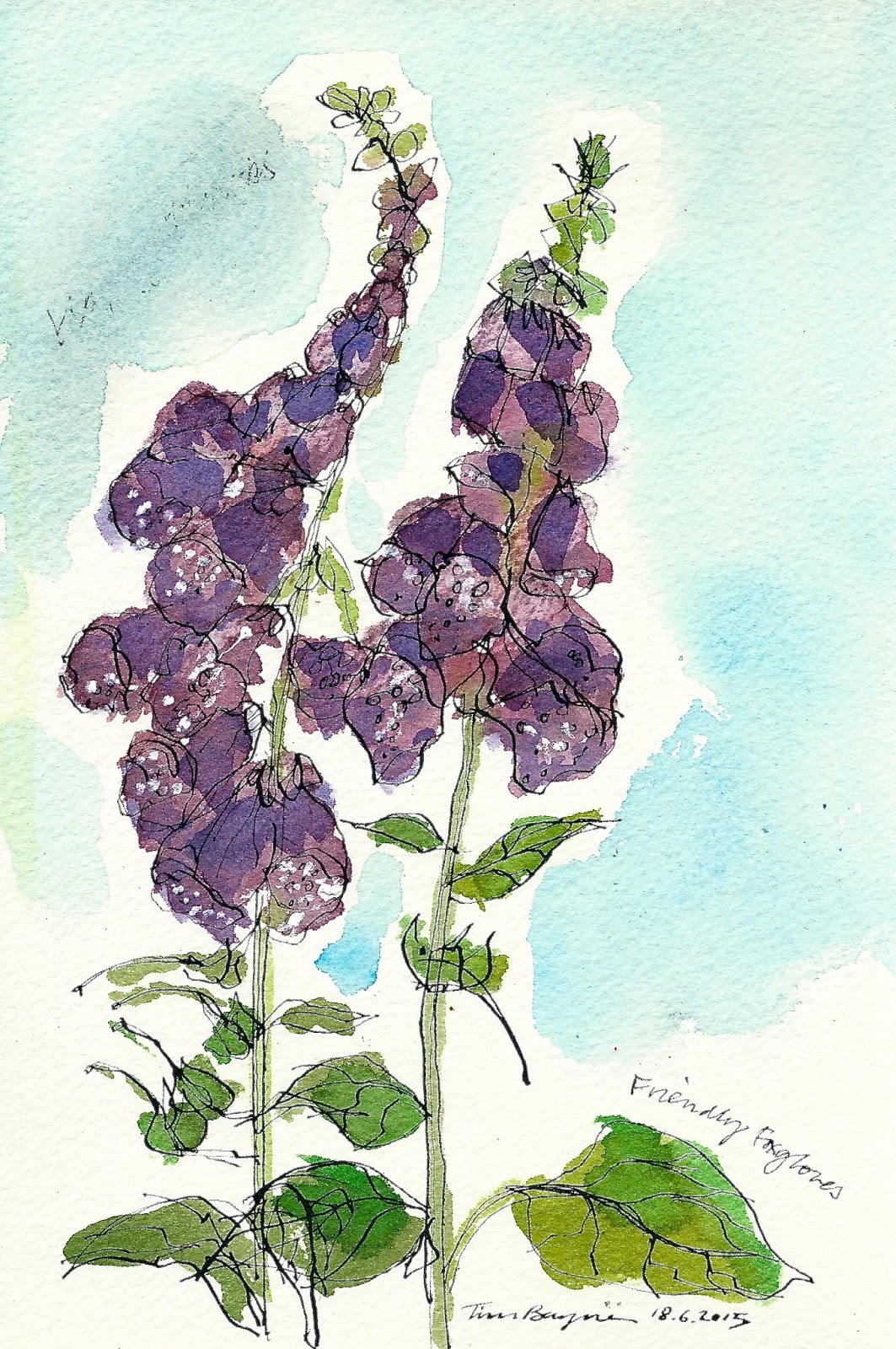
Foxy Gloves


Foxgloves and their official name, the ominous sounding Digitalis thrive in the Chilterns. In late June early July thy make a proud stand of purple-pink-violet. They are at home the partial sunlight of hedgerows or deep shade of our woods.

And we pass them on the Saturday morning bike ride, in a range of haunts, including open clearings, heath margins.

NIL BY MOUTH
Depending on the species, the digitalis plant may contain several deadly physiological and chemically related cardiac and steroidal glycosides. The Foxglove earned several, more sinister, names: dead man’s bells and witch's gloves.


Nonetheless Foxgloves are lovely to watch at this time of year.

Wednesday, 1 July 2015

Mark’s Veg Plot: seeing is believing

Cyber goodness into hyper reality


Sian and I enjoy, like thousands of others, enjoy http://marksvegplot.blogspot.co.uk
each day.

Mark’s stories, gardening tips and tempting tips on cooking all stimulate ideas.

And other Friday we turned cyber goodness into hyper reality with a drive down in Hampshire to meet Mark and his wife Jane.

The ‘plot’, Mark’s garden, is a wonder to behold. Every square inch is utilised and cared for with precision.  Meticulousness doubtless born from his experience on the Parade Grounds of HK where he served in the British Forces for some time.

Sian and Mark did the full tour after Coffee and Cake. I quizzed Jane about her penchant for competitions (she has an enviable track record of winning!) and her passion for making lovely greetings cards. 


A short but sweet visit and full of inspiration.

Tuesday, 30 June 2015

An Amazing Allium


Some Allium species are border plants grown their ornamental flowers and their architectural qualities.

Our friend Sarah gave us several small plants a long time back. We popped them in the ground and then over the recent months saw these strange plants come out of the ground! Now we have magnificent purple flowers.

Most likely we are blessed with A. hollandicum 'Purple Sensation' is one of the most popular. This cultivar has been given the RHS’s Award of Garden Merit. 


I’d certainly give Allium Hollandicum a gold star, well a purple one at least.

Sunday, 28 June 2015

Lovely Lupins


The seeds of lupins, commonly called lupin beans, were popular with the Romans, who cultivated the plants throughout the Roman Empire.

The European white lupin beans are commonly sold in a salty solution in jars. Rather like olives are pickles lupin seeds can be eaten with or without the skin and are a popular street snack in the southern Europe, after being treated with several soakings of water, and then brined.

I am not sure with the idea of lupin seeds will become the snack sensation at Beaconsfield Farmers Market.


However they do look lovely right now and are good for the soil. Roman agriculturalists were adamant that this plant contributes to the fertility of the ground.

Saturday, 27 June 2015

All Greek, now gone


Greek and Roman   The good and the great
British Museum
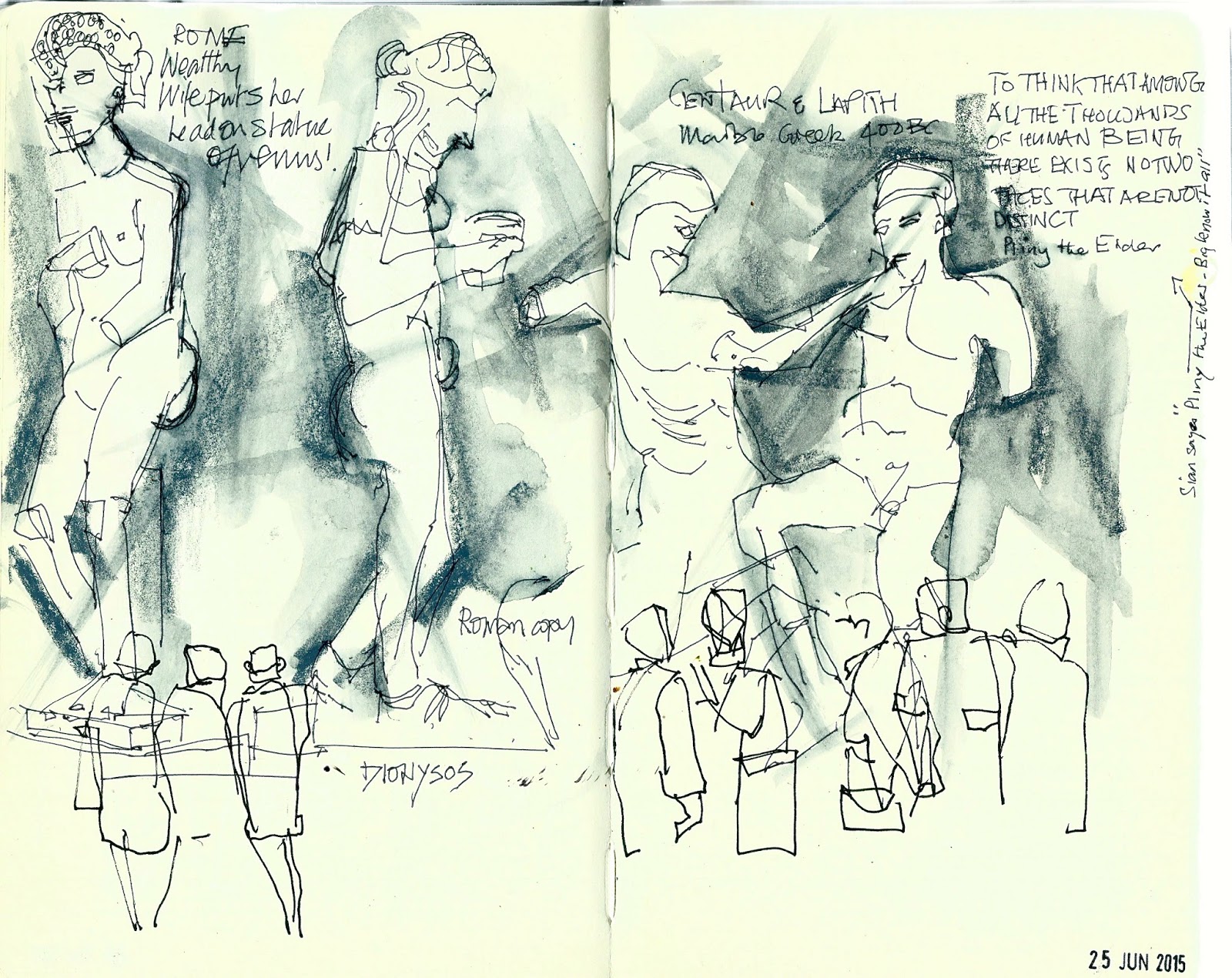
We just got to see the exhibition Defining beauty: the body in ancient Greek art for it closes on tomorrow.

Although The Times described the show as ‘the absolutely-must-see exhibition of the year’ it did feel like the British Museum where having an archeological car boot sale. Had they gone into the storeroom and hauled out everything Greek and anything that was created by the Romans copying the Greeks?


Venus   far left in picture
One example of this cross-over was a lovely and huge statue in the Greek style of Venus with her head modelled, from life, from the head of a wealthy lady of Rome who had paid for the piece.

Absolutely worth a visit to “Experience the brilliance and diversity of ancient Greek art in this major exhibition focusing on the human body, from abstract simplicity of prehistoric figurines to breathtaking realism in the age of Alexander the Great.” BM